


Proxy as a Service (PaaS): Why Proxy Management Belongs in the Platform, Not Your Code
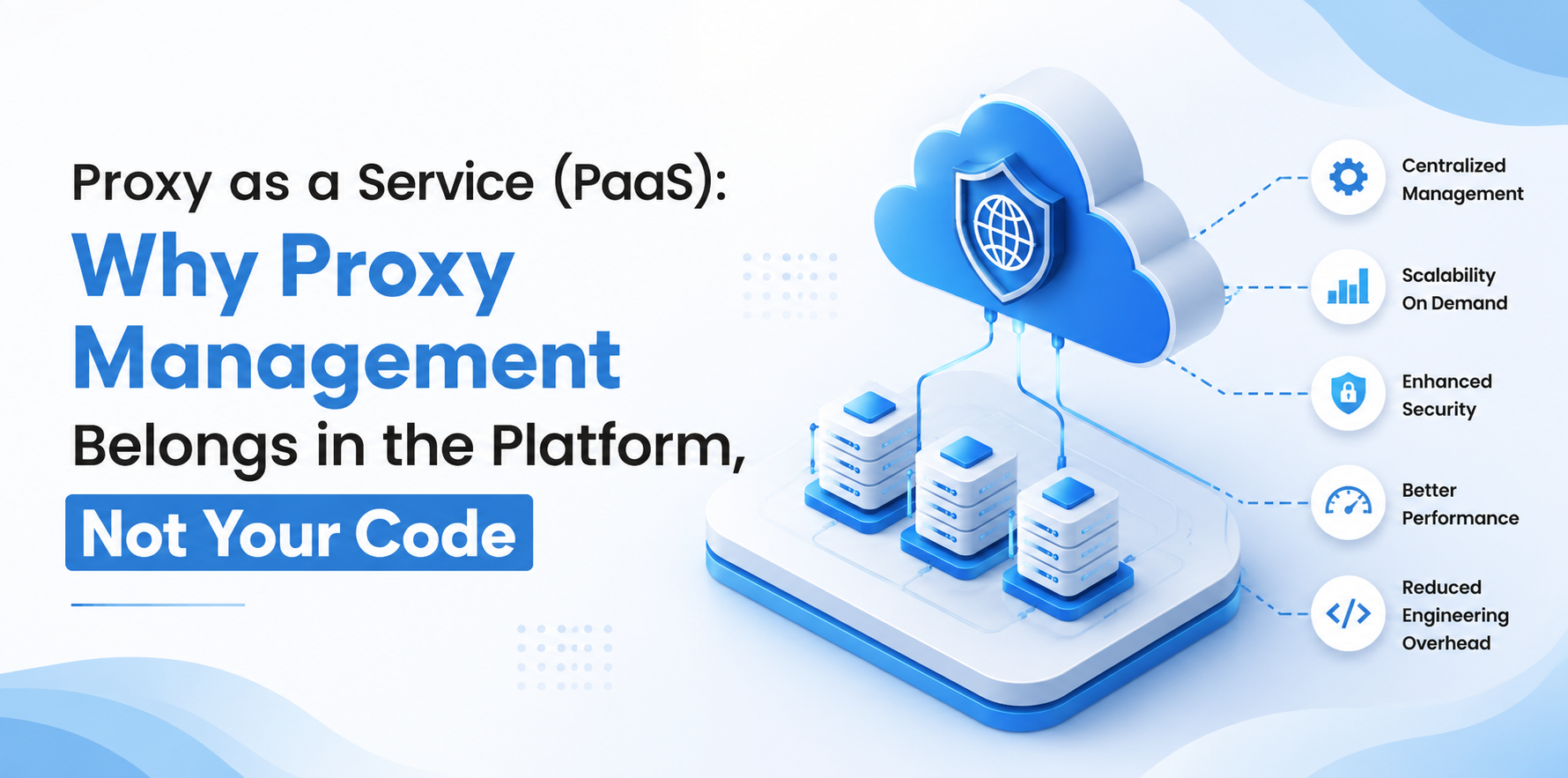
Proxy as a Service (PaaS) is a managed proxy capability delivered by the platform instead of implemented inside each application. In Quantum DataFactory, proxy configuration is provisioned automatically at workflow design — so developers keep using standard HTTP libraries and existing business logic, while the platform handles proxy provider selection, authentication, rotation, and routing behind the scenes.
Key Takeaways
- Proxy as a Service moves proxy management out of application code and into the platform layer.
- In Quantum DataFactory, a single machine-level setting enables proxy — no HTTP client refactor, no rotation logic to maintain.
- The same platform configuration governs proxy behavior across development, testing, and production, removing environment drift.
- PaaS is different from a proxy provider: providers give you IP addresses; PaaS delivers the whole capability as a service.
- The clearest fit is data extraction, public-web collection, API integrations, and enterprise automation workflows.
Start free on Data Factory — try Proxy as a Service. Sign up here.
What is Proxy as a Service?
Proxy as a Service (PaaS) is a managed proxy capability delivered by the platform instead of implemented inside each application. In Quantum DataFactory, proxy configuration is provisioned automatically at runtime — so developers keep using standard HTTP libraries while the platform handles proxy provider selection, authentication, rotation, and routing behind the scenes.
The result: proxy management is no longer a per-pipeline engineering problem. It is a platform capability that every Quantum Machine inherits by configuration.
For the underlying standards behind this behavior, see MDN: Proxy servers and tunneling.
Why Proxy Management Usually Ends Up Inside Application Code
When a team ships their first serious data-extraction workload, proxy support is rarely on the roadmap. It surfaces the moment a source blocks the request, rate-limits by IP, or requires a route the corporate network does not provide.
The pragmatic fix is to add proxy support to the pipeline: pick a provider, wire authentication into the HTTP client, add rotation logic when endpoints fail, and hard-code environment-specific settings. Ship it. Move on.
The problem is that every new pipeline repeats the same pattern. Every provider change requires a code deployment. Every new geography requires touching multiple repos. And the reviewers who read those pull requests now spend more time reasoning about network plumbing than about the business logic that produces customer value.
The Hidden Cost of Coupling Proxy Logic to Your Pipelines
Business Logic Gets Diluted
A Quantum Machine that should describe the workflow ends up mixed with proxy provider auth, rotation retries, and environment-specific settings. Reviews get longer. Onboarding gets harder. Nothing in the code is faster to ship.
Environments Drift Silently
Proxy behavior differs across dev, staging, and production because each is configured per-application. What worked yesterday breaks tomorrow when a proxy endpoint rotates, a credential expires, or a new geography is required — and nobody has central visibility.
Maintenance Never Ends
Every pipeline needs updates when the provider changes API contracts, when rotation strategies change, or when a new region is added. Engineering hours disappear into work that produces no new customer value.
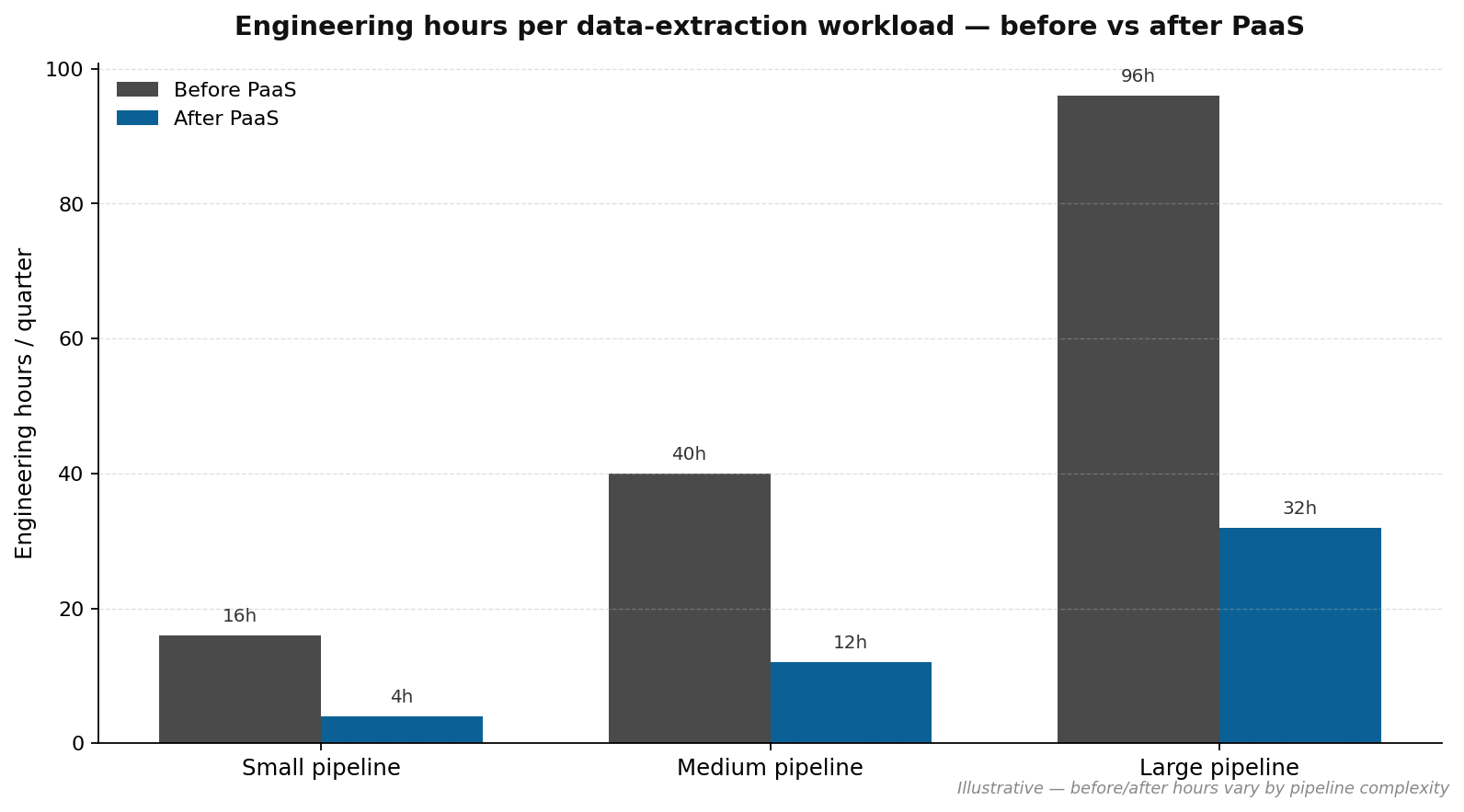
Figure 1 — Engineering hours per data-extraction workload (illustrative before/after).
How Proxy as a Service Works in Quantum DataFactory
At QuantumDataLytica, the mission is simple: help customers focus on solving business problems, not infrastructure challenges. So instead of asking developers to write proxy-specific code, we built Proxy as a Service directly into the Quantum DataFactory platform.
With a machine-level configuration, Quantum DataFactory provisions the required proxy configuration at workflow design time. The platform manages the networking layer transparently, and existing Quantum Machines continue running without any modifications.
From a Machine Developer experience perspective, nothing changes. Developers keep using standard HTTP libraries and existing business logic, while the platform handles proxy configuration seamlessly behind the scenes. Proxy behavior itself follows standard HTTP Semantics (RFC 9110).
- Enable proxy at the machine level. Turn on proxy support in the Quantum Machine’s configuration — one setting, no HTTP client refactor, no env-var shuffle.
- Platform provisions the proxy at runtime. When the workflow runs, Quantum DataFactory attaches the required proxy configuration transparently, including endpoint selection and authentication.
- Machine runs unchanged. The Quantum Machine executes exactly as it always has, using standard HTTP libraries. All proxy handling is abstracted away.
- Route, rotate, and audit centrally. Manage credentials, routing rules, and rotation from one platform surface with full visibility into which workflow used which route.
- Ship the same configuration to every environment. The same platform-level PaaS configuration governs behavior in development, testing, and production — no environment-specific proxy code.
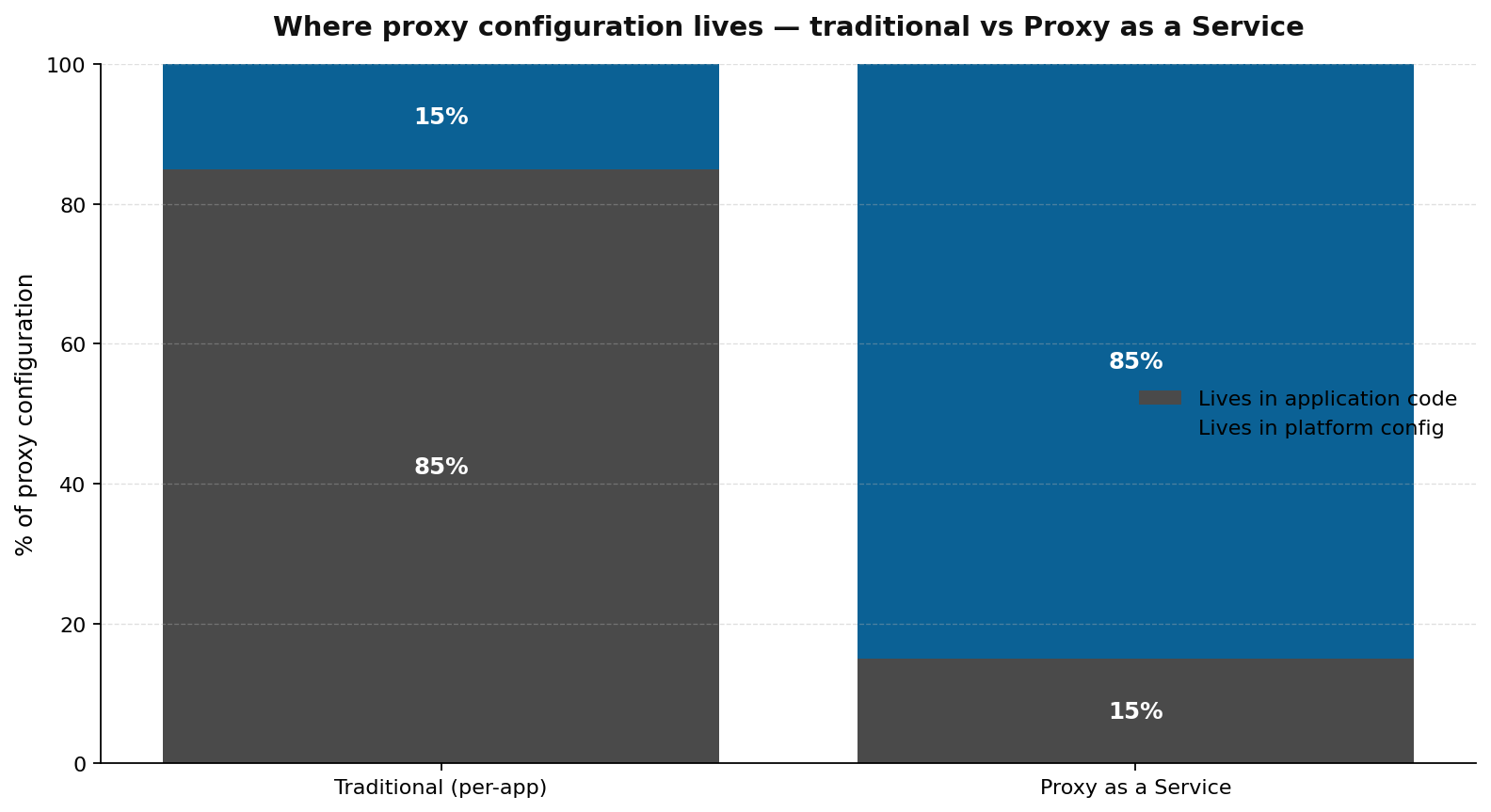
Figure 2 — Where proxy configuration lives, before vs after PaaS.
Proxy Provider vs Proxy as a Service: What’s the Difference?
A proxy provider gives you IP addresses. Proxy as a Service delivers the whole capability — provisioning, authentication, rotation, and routing — as a platform service. Here is the honest side-by-side.
| Dimension | Proxy Provider | Proxy as a Service |
|---|---|---|
| What you get | A pool of IP addresses | A managed capability provisioned by the platform |
| What lives in your code | Provider auth, HTTP client wiring, endpoint rotation logic | Standard HTTP libraries and business logic only |
| Who maintains it | Your engineering team | The platform |
| Environment consistency | Config drifts per app + env | One platform config, same behavior everywhere |
| Time-to-new-source | Refactor per pipeline | Machine-level setting change |
Who Benefits Most from Proxy as a Service
Data Extraction Teams
Public-web data collection at scale — the proxy layer becomes a platform capability, not a per-script problem. This applies directly to workflows like scheduled crypto data collection and hotel rate shopping automation.
API Integration Owners
Integrations that need controlled outbound connectivity or specific network routing work reliably without custom infrastructure.
Enterprise Automation
Workflows that touch external systems inherit consistent, audited outbound behavior across every environment.
Machine Developers
Ship business logic, not networking plumbing. Standard HTTP libraries, standard code, platform-managed connectivity. See the Quantum DataFactory developer documentation for configuration details.
The Operator Principle Behind Our Approach
Every platform capability we build at Quantum DataFactory answers to the same rule: infrastructure capabilities should be delivered as platform services, not implemented repeatedly inside every application.
This mirrors the reliability thinking documented in Google Cloud Reliability principles, and it is visible across QDL customer use cases.
Ship Data Workflows Without Owning the Proxy Layer
Try Proxy as a Service in Quantum DataFactory. Start free on the Data Factory portal — no infrastructure to manage.
Start free on Data Factory · Talk to us
FAQs
Proxy as a Service (PaaS) is a managed proxy capability delivered by the platform instead of implemented inside each application. In Quantum DataFactory, proxy configuration is provisioned at runtime by the platform, so developers do not wire up providers, authentication, or rotation in their code.
No. Existing Quantum Machines keep running unchanged. Standard HTTP libraries and existing business logic continue to work - the platform attaches proxy configuration transparently at runtime.
A proxy provider gives you IP addresses; you still write and maintain the proxy code inside your application. Proxy as a Service delivers the whole capability - provisioning, authentication, rotation, and routing - as a platform service.
Data extraction, public-web data collection, API integrations, and enterprise automation workflows where outbound connectivity or specific network routing is required.
Yes. The same platform configuration governs proxy behavior in development, testing, and production, so behavior stays consistent without environment-specific proxy code.
Enable it with a machine-level configuration setting inside Quantum DataFactory. The platform then provisions the required proxy configuration when the workflow runs — no code deploy, no environment restart.

Nitin Suvagiya is the Architect and Lead Developer of the Quantum-Core-Engine at Quantum Datalytica, driving advanced workflow automation and data analytics solutions. As a DevOps-certified engineer, he specializes in cloud automation, CI/CD pipelines, Kubernetes, and scalable infrastructure. His expertise in software architecture and machine development ensures seamless deployment, high-performance computing, and optimized workflows. Nitin plays a crucial role in building intelligent, data-driven solutions that empower businesses with efficiency, reliability, and innovation in Quantum Datalytica’s ecosystem.
Recent Blogs
-
Workflow Automation 09 Sep, 2026
Clinical Trial & IVD Data Automation: Automating Compliant Pipelines End-to-End
-
Personalized Learning 03 Sep, 2026
From One Spreadsheet to Ten Study Plans
-
Workflow Automation 26 Aug, 2026
From HubSpot to Airtable to Inbox in Seconds: The No-Code Deal Sync Workflow, Explained
-
Workflow Automation 20 Aug, 2026
Compute as a Service: Dedicated VMs for Workflow Execution
-
Workflow Automation 12 Aug, 2026
Proxy as a Service: Adding Proxy Support to Hundreds of Pipelines Without Changing Code